In Art What Is the Technical Name for Color?
Color is the element of art that refers to reflected light. Color theory is defined equally a theory considering information technology cannot be proved. Theories are by and large accustomed, despite the fact that they cannot be proven. Laws are accepted because they tin exist proven.
At that place are volumes and volumes of information available about color. This page, while thorough, will present colour theory in an "like shooting fish in a barrel to understand" fashion. It is an exciting, always-changing science. Color has an affect over how we feel about objects, how we behave, and how our bodies react to circumstances.
What is color theory?
If color theory is simplified, it tin can be broken down into 3 parts- The color wheel, color value, and color schemes. Each function of color theory builds on the previous. Understanding each section of color theory fully, will help y'all better sympathize its importance in the creation of art.
Color Theory Part 1 - The Color Cycle
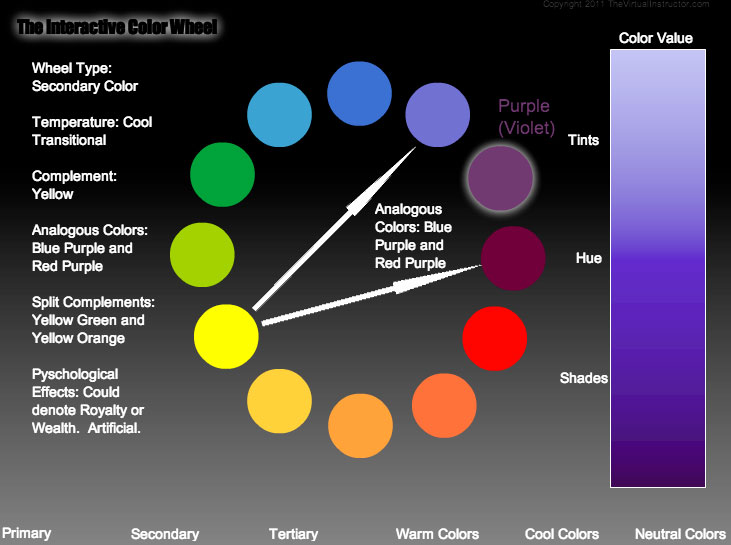
The color wheel was developed by Sir Isaac Newton past taking the color spectrum and bending it into a circle. If you follow around the colour bicycle, you lot will find the same order of the colour spectrum- red, orangish, yellowish, greenish, blue, indigo(blue-violet), and violet. Some remember it by the acronym ROY G. BIV.
The color wheel is made upwardly of three dissimilar types of colors - Chief, Secondary, and Tertiary.
The principal colors are scarlet, yellow, and blue. They are chosen primary for a couple of reasons. First, no two colors can exist mixed to create a principal colour. In other words, primary colors can merely be created through the use of natural pigments. Secondly, all other colors found on the color wheel can be created by mixing primary colors together.
The secondary colors are orange, light-green, and purple. Secondary colors are created past mixing equal parts of any two chief colors. Yellowish and blueish will give you lot green. Red and blue will create purple(violet). Red and yellowish will give you orange.
Tertiary colors are created by mixing equal parts of a secondary colour and a main color together. In that location are six 3rd colors- red-purple, red-orange, blue-green, yellow-green, blue-royal, and yellow-orange. Find that the proper way to refer to tertiary colors is by listing the primary color first and the secondary color, second.
Click on the image below to check out The Interactive Colour Bike...
Color Theory Part 2 - Color Values
The 2nd part of color theory deals with color values. Value is the darkness or lightness of a color. When dealing with pure colour (hue), value tin can be affected by adding white or black to a color. Adding white to a color produces a tint...

Adding black to a colour produces a shade...

When grays are added to the color, the intensity of the color is affected. Intensity is related to value.
Colour Theory Office 3 - Color Schemes
Colour schemes are ways colors are put together in an intelligent way
- Monochromatic - literally ways 1 (mono) color (blush). And so a monochromatic
color scheme is made upward of one colour and information technology's shades and tints.
- Analogous colors - are colors that are next to each other on the colour bike.
When used as a colour scheme, analogous colors tin be dramatic. Ex. Bluish, blue-green, green, and yellow-green; red, crimson-purple, majestic, blue-regal
- Complementary colors - are colors establish directly across from each other on the color wheel. Complementary color scheme provide strong contrast. Ex. Blue and orange, red and green, xanthous-dark-green and scarlet-purple.

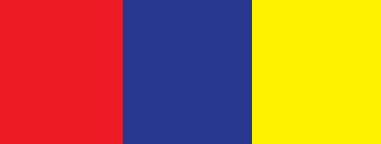
- Color triads - consist of three colors found on the colour bike that are equally spaced autonomously from each other. Ex. Red, blue and yellowish or orange, green and purple.
- Separate complementary - color schemes are made up of a color and it's complements closest analogous colors. Ex Blue, yellow-orangish and red-orange. Cherry-red-orange, red-purple, light-green.

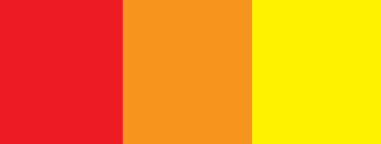
- Warm colors - colors that are usually associated with warm things. Ex. Red, yellow, orange.
- Cool colors - colors that are commonly associated with cool things. Ex. Bluish, purple, green

Color Theory Terms and Definitions
- Color - Chemical element of art derived from reflected calorie-free. Nosotros encounter color because light waves are reflected from objects to your eyes.
- Color wheel - color spectrum bent into a circumvolve.
- Primary colors - The well-nigh bones colors on the color wheel, red, yellow and blue. These colors cannot be made by mixing.
- Secondary colors - colors that are made by mixing 2 primary colors together. Orange, green and violet (royal).
- Tertiary colors - colors that are fabricated past mixing a principal colour with a secondary color.
- Hue - the name of the color.
- Intensity - the effulgence or dullness of a color. DO Non Confuse WITH VALUE.
- Color value - the darkness or lightness of a color. Ex pink is a tint of red.
- Tints - are created past adding white to a color.
- Shades - are created by calculation black to a color.
- Optical color - colour that people actually perceive- also called local colour.
- Capricious color - colors chosen past the artist to limited feelings or mood.
Source: https://thevirtualinstructor.com/Color.html

Postar um comentário for "In Art What Is the Technical Name for Color?"